

Architecture as a Silent Pedagogue: When School Desks Teach Sustainability
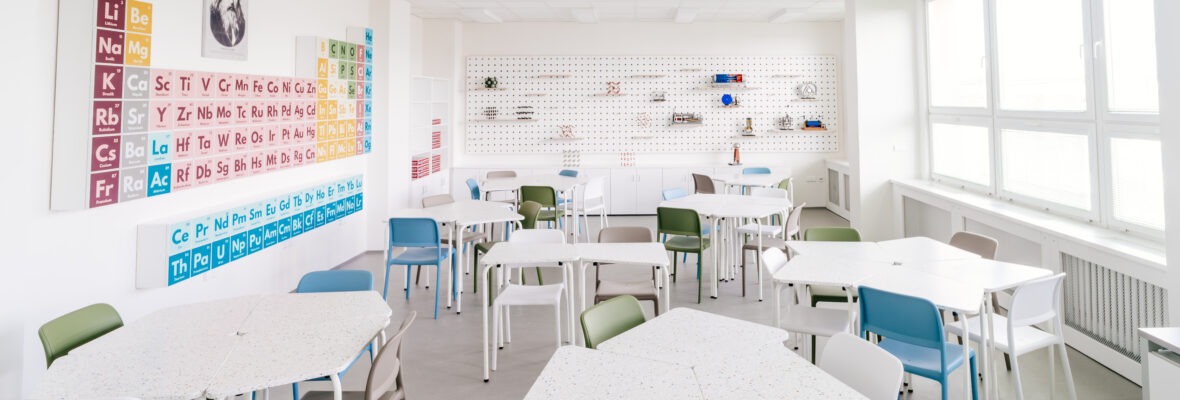
How do you combine the strict hygienic requirements of a chemistry lab with the vision of a modern and sustainable school? For the renovation of these school spaces, Ateliér Juránek placed their bet on Mínus® panels by Plastic guys. The result is an interior that shows students that recycling and high-end design belong together in the 21st century.
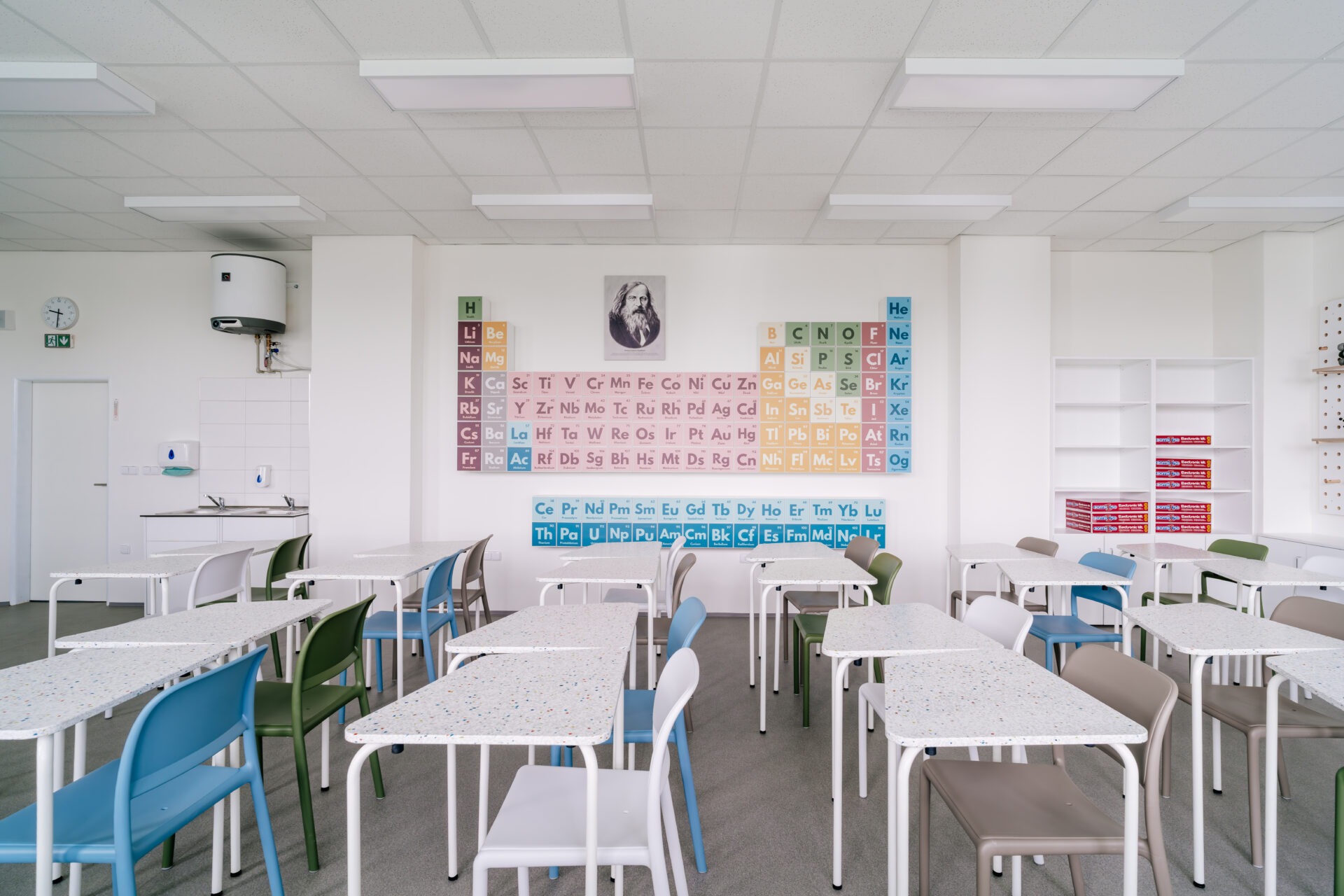
Design that Motivates
The architects’ primary ambition was to create a functional and organized environment that supports both focus and creativity. The school is no longer viewed as a sterile “box for learning,” but as a space for long-term stay that should feel natural, friendly, and welcoming. High-quality design and materials with their own story serve as a subtle yet powerful motivation for students.
The Symbiosis of Chemistry and Recycling
The idea of using recycled plastic emerged during the search for an extremely durable surface for specialized classrooms. Mínus® panels caught the architects’ attention with their unique combination of durability and visual depth.
The realization of furniture for such a demanding environment was made possible through close cooperation with the supplier Alex nábytek s.r.o. The desk designs were based on their proven construction principles, ensuring maximum stability and functionality of the entire unit.
“We were looking for a material that truly works in a demanding school setting while complementing the technical character of the classroom. For architects, Mínus® panels represent a robust and moisture-resistant alternative to traditional laminate,” explains Marek Juránek.
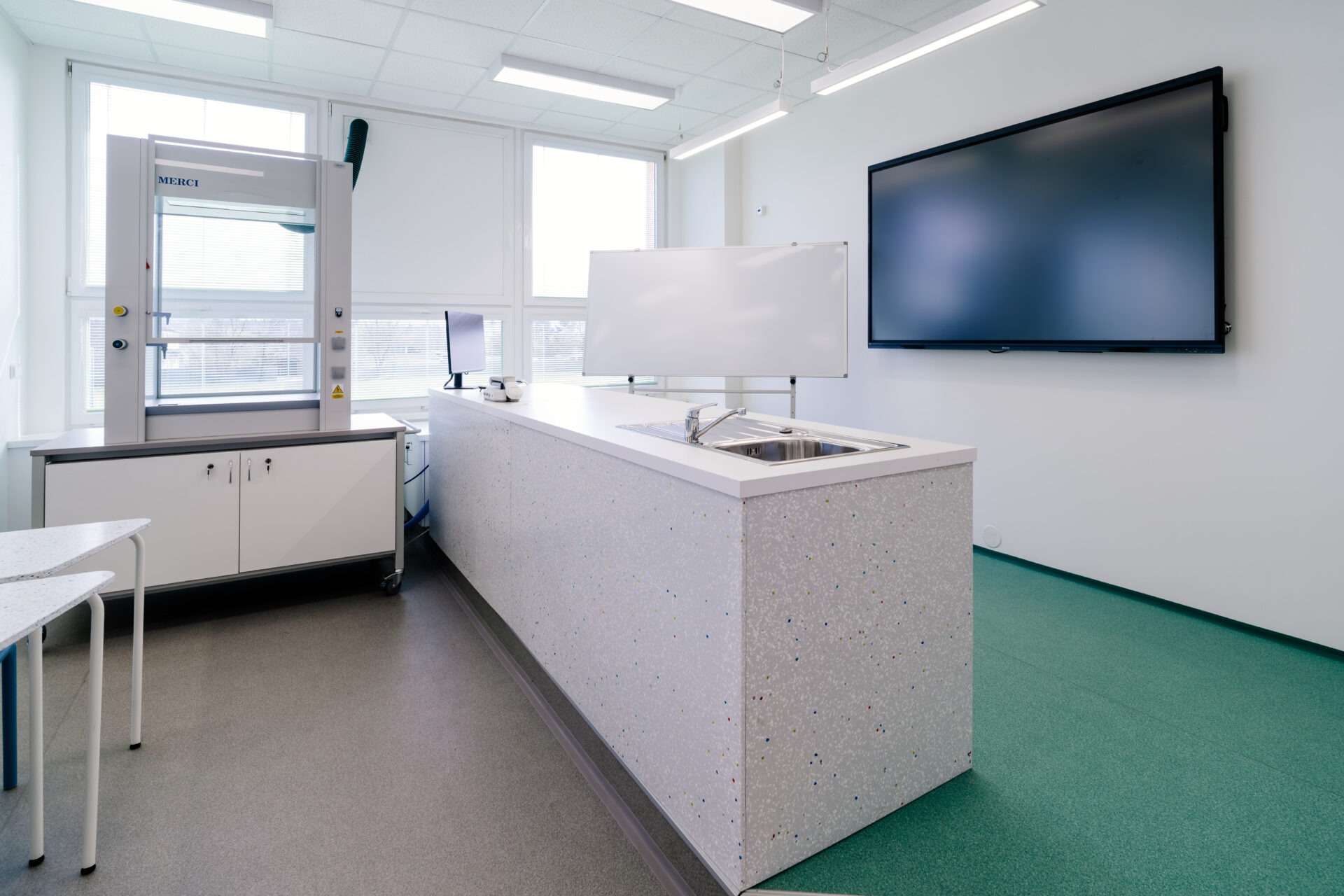
White Confetti Texture: Vibrant and Practical
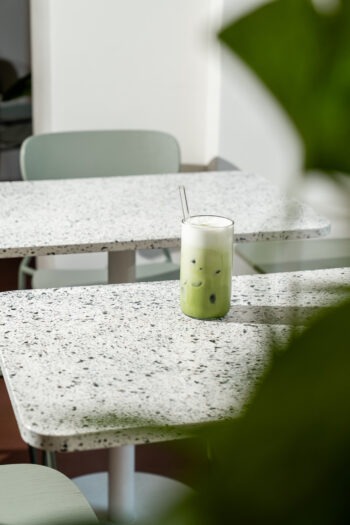
School desks are among the most heavily stressed elements—facing water, chemicals, and mechanical wear on a daily basis. Recycled plastic is non-absorbent and, thanks to the specific White Confetti texture, naturally masks minor signs of use. In a chemistry lab, this texture visually comes alive—acting as a “frozen” stylization of ongoing chemical reactions, playfully contrasting with the room’s technical equipment.
Sustainability as a Natural Component
The school management appreciated both the practical durability and the symbolic value—the school leads by example in waste management. The design element serves as an educational tool: waste does not have to be a final destination, but a new resource. This project is also part of a broader vision for the school’s renovation, following the flood events of 2024.
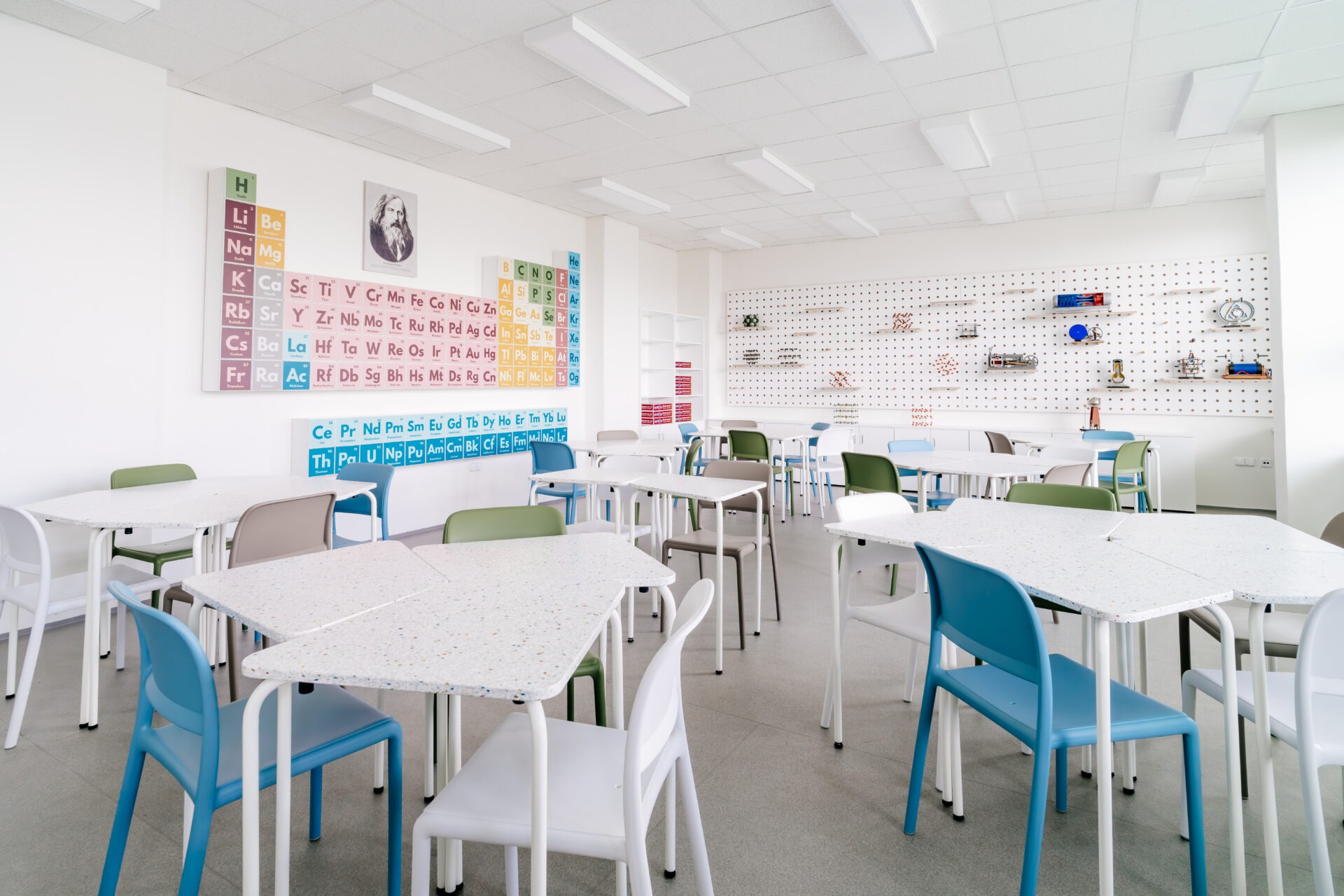
Project Details:
- Architectural Design: Ateliér Juránek (Marek Juránek, Denisa Juránková)
- Construction & Production: Alex nábytek s.r.o.
- Material: Mínus® Panels (White Confetti texture)
- Application: School desks and work surfaces in the chemistry classroom