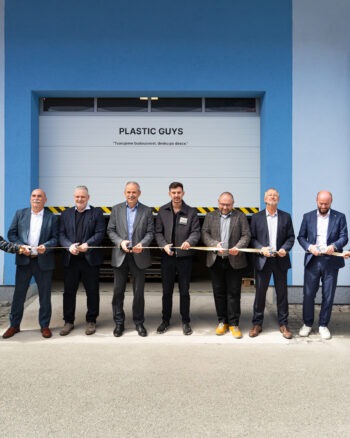


Public space consists of areas accessible to everyone—squares, parks, schoolyards, transport hubs, or public gardens. These are places for meeting, movement, and relaxation, fundamentally shaping the quality of urban life. In the context of climate challenges, there is a growing demand for materials that are not only functional and aesthetic but also environmentally responsible. In this regard, recycled plastic is proving to be an exceptionally suitable alternative—and Plastic guys are leading the way by turning plastic waste into long-term sustainable solutions for public areas.
Why Recycled Plastic Belongs in Public Spaces
- Durability and Longevity – Mínus® panels withstand weather conditions, UV radiation, and vandalism. They are rot-proof, easy to clean, and require no painting or complex maintenance.
- Circular Economy – Every board is made from 100% recycled plastic with no additives. At the end of its lifespan, it can be processed again. This makes plastic a material that doesn’t end up in a landfill but enters a new cycle.
- Custom Design – The material allows for various colors, textures, and shapes. This ensures that functional elements—such as benches, bridges, or walls—can also serve as aesthetic features of a public space.
Examples of Public Space Applications
Schulzentrum Wolbeck (Germany)
A unique bench was created in the atrium of the Wolbeck school campus as a result of a collaboration between students from various schools. The recycled plastic seat combined with solid wood supports forms a functional meeting spot. The project was also conducted as a workshop, connecting ecology, craftsmanship, and architecture within a school environment. [About the project]

Garden with Bridges (Germany)
Recycled plastics revitalized a therapeutic garden for individuals with limited mobility. Bridges, railings, and accompanying elements aid orientation, balance, and rest. Using plastic allowed for the creation of lightweight yet durable elements in organic designs that meet safety standards and aesthetic requirements for public greenery. [About the project]

mmcité / Stockholm Furniture Fair
At this prestigious fair, mmcité introduced urban furniture (e.g., Morse, Orbit) featuring Mínus® material, produced in collaboration with Plastic Guys—recycled from fishing nets, keyboards, or refrigerators. These elements conceptually fit into public spaces—parks, sidewalks, shelters—proving that recycled material can stand alongside metal, concrete, or wood as an equal partner. [About the project]
Techmania Science Center, Plzeň
The science center’s public exhibition uses Mínus® panels in interactive modules focused on sustainability. The recycled material doesn’t just inform; it inspires—visitors can touch it, understand its origin, and see the link between design and ecology. [About the project]

What Does the Future Look Like?
Due to their durability, recyclability, and versatility, recycled plastics have broad applications in urban public spaces:
- Schoolyards and campuses – benches, seating areas, cladding.
- Urban parks – bridges, railings, playground elements.
- Transport hubs – bus stop walls, info desks.
- Gardens and rehabilitation centers – navigation and relaxation elements.
Plastic guys demonstrate that a material once considered waste can have a new purpose and function—becoming an integral part of public space. With recycled plastics, the future of cities does not have to sacrifice aesthetics for sustainability.